Practical guide
A faster reply is not a finished task
A policyholder asks for a replacement document. Use that ordinary request to decide what an agent should do, what staff should keep and how you will recognise success.
Read the guideFeatured guide
An absent approver, an address that changes mid-task and a timed-out update: plan the staff queue and recovery steps before putting an agent in front of customers.
Read the guide
Practical guide
A policyholder asks for a replacement document. Use that ordinary request to decide what an agent should do, what staff should keep and how you will recognise success.
Read the guidePractical guide
An assistant that drafts a complaint acknowledgement gives you a useful test case. Ask suppliers for records that show what it used, who approved it and what reached the customer.
Read the guide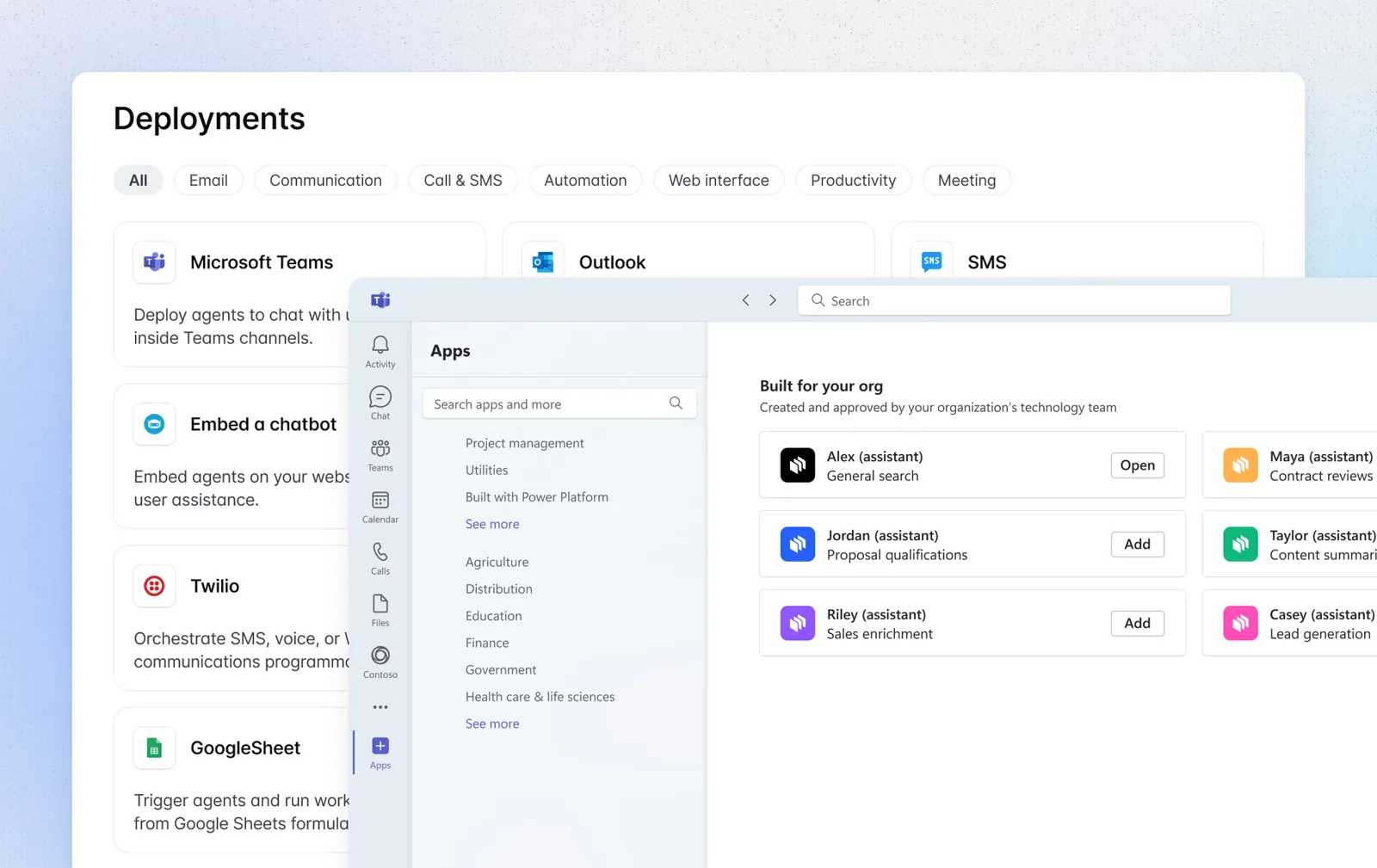
Our review
Nexus makes sense when your service team knows the process and wants help turning it into an agent. Ask it to turn its joint-build offer and launch checks into named jobs and evidence for your customer journey.1,2
Best for: A defined service task with someone in your firm responsible for it and a supplier helping with the build.
What to check: You still lack an answer on a required approval rule, data route or current contract.
Read the review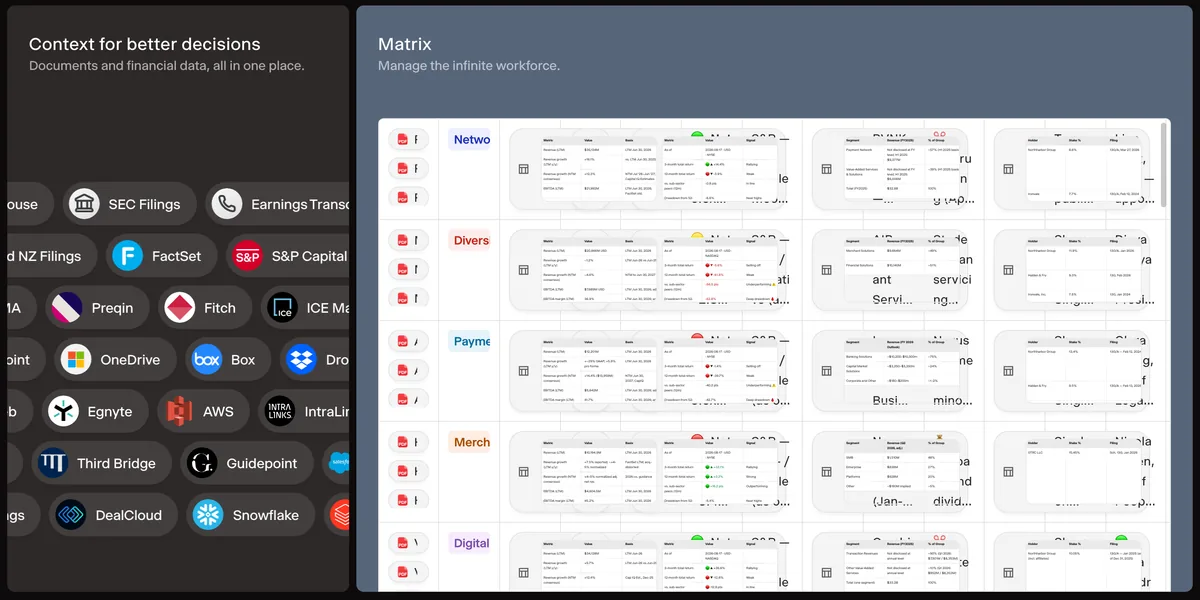
Our review
Hebbia is a closer match when a professional needs a financial research pack to review. Its source-linked findings can help with that work. Deciding what reaches a customer, or changes their record, is a separate step.3,4,5
Best for: Financial research, diligence and evidence for internal review.
What to check: You need the whole customer-service action and nobody has shown how approval will work.
Read the review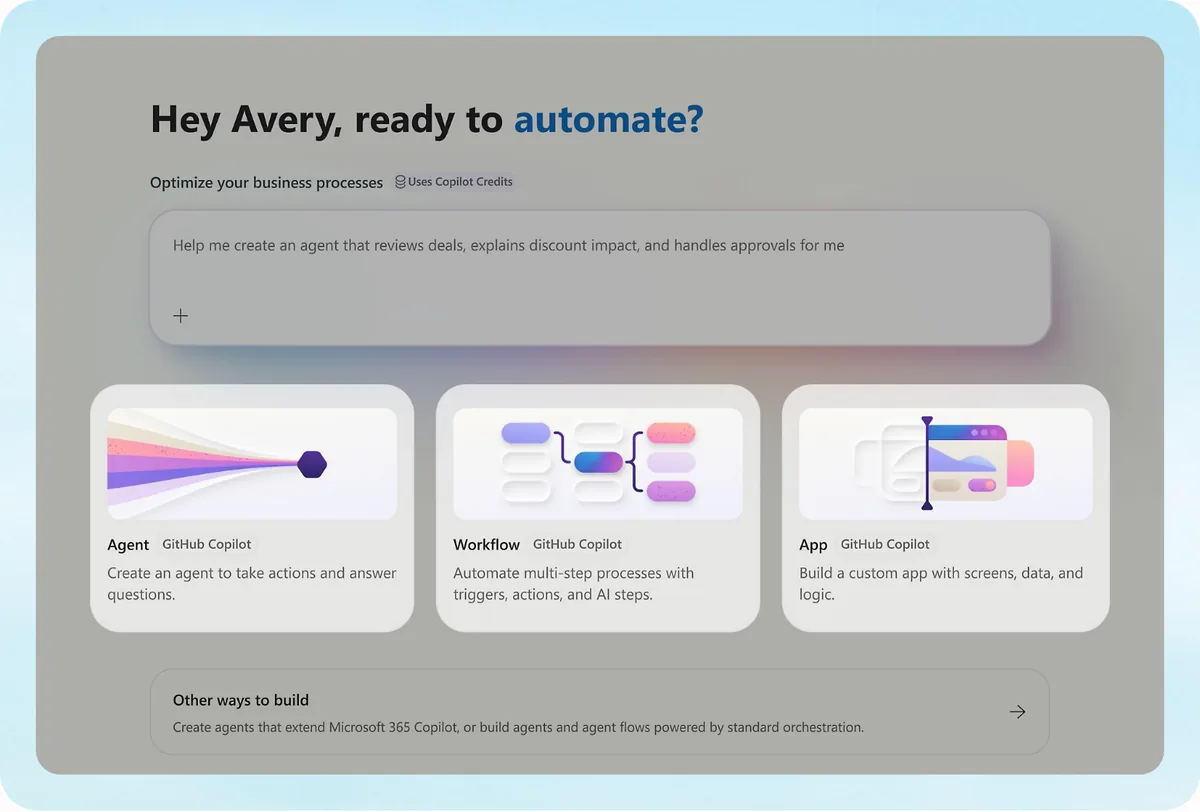
Our review
Copilot Studio deserves a close look if your Microsoft team will build and run the agents. It documents publishing restrictions, data policies and release approvals. The advantage depends on colleagues taking responsibility for setting them up and using them.6,7,8
Best for: Firms with a Microsoft team ready to manage setup and releases.
What to check: Nobody has been assigned the connections, launch decisions or difficult cases after launch.
Read the reviewChoose which providers to keep, then focus the evidence on one buying criterion.
Open a name for the evidence and full review.
Choose at least one provider to compare.
Nexus makes sense when your service team knows the process and wants help turning it into an agent. Ask it to turn its joint-build offer and launch checks into named jobs and evidence for your customer journey.1,2
What to check: You still lack an answer on a required approval rule, data route or current contract.
Nexus says every deployed agent has a measurable business KPI from day one.9
Nexus says agents pass uncertain cases on with the full context.10
Nexus lists audit trails and decision traceability. Its launch checks include sign-off on the audit trail.11,2
Nexus lists access based on roles and makes the access model part of its launch checks.11,2
Nexus confirms that experienced consultants run engagements and prices are per role automated, not based on consultant time.12
Hebbia is a closer match when a professional needs a financial research pack to review. Its source-linked findings can help with that work. Deciding what reaches a customer, or changes their record, is a separate step.3,4,5
What to check: You need the whole customer-service action and nobody has shown how approval will work.
Hebbia describes Max researching deals and producing spreadsheets, slides and reports.3
What makes the proposed Hebbia process wait for an authorised person before sending material to a customer?
Hebbia describes tracing findings to their sources and showing who accessed data and what they did.4,13
Hebbia describes just-in-time production access for its own staff.14
Who will set up the connections, train reviewers, approve the result and provide support for your Hebbia project?
Copilot Studio deserves a close look if your Microsoft team will build and run the agents. It documents publishing restrictions, data policies and release approvals. The advantage depends on colleagues taking responsibility for setting them up and using them.6,7,8
What to check: Nobody has been assigned the connections, launch decisions or difficult cases after launch.
Microsoft documents tests before publishing, along with monitoring and evaluation tools.15,16
Microsoft’s Customer Conversation harness can hand a conversation to a human representative.17
Microsoft documents maker audit logs in Purview and alerts about agent activity in Sentinel.18,19
When knowledge answers use agent-user authentication, Microsoft limits them to content that person can access.20
Microsoft documents maker testing and approval gates for releases.15,8
Gemini Enterprise may fit a team comfortable with Google Cloud accounts and permissions. Specify the app edition and any Agent Platform work separately. Access to knowledge in the app does not settle what a custom agent may do.21,22,23
What to check: The proposal combines the app and Agent Platform into one purchase or assumes their controls are interchangeable.
What customer-service result will your Gemini setup show, and how will you find requests left unresolved?
Google’s Agent Platform documentation describes agent identities and rules for tool use.23,24
The enterprise editions list Cloud Audit Logs and Access Transparency.25
The enterprise editions document Identity and Access Management (IAM), Workforce Identity Federation and access lists from source systems.21
Google offers a workbench for building without code. The app and Agent Platform are separate purchases.26,22
Glean is worth considering when staff need answers from several systems and permission before taking the next action. It directly describes read and write permissions and approval before execution. Ask to see those work with your service accounts.27,28,29
What to check: Your launch depends on a policy feature still marked as coming soon in the reviewed material.
How will you tell whether an answer resolved the customer’s request, rather than finding related information?
Glean documents requiring approval before agent actions run.28
Glean describes an always-on audit trail with events that can be sent to a security monitoring system, or SIEM.30
Glean says source-system permissions apply to every read and write. It also describes scoped service credentials managed by administrators.27,29
The security page checked for this review marks agent governance policies and separate policies for selected agents or users as coming soon.31,32
WRITER may suit teams preparing customer communications for staff review. Its shared context and deployment help fit that task. The detail to check is the exact agent product: some logging and guardrails do not cover every way of building an agent.33,34,35,36,37
What to check: Your custom agent depends on logs or guardrails that have not been established for that product.
WRITER positions itself for marketing and revenue teams. It describes grounding agents in knowledge about the brand, products and customers.33,34
WRITER lists approval flows among its controls for connected systems.38
WRITER describes activity traces, source citations and decision logs.39
WRITER describes permissions based on roles and least-privilege access: giving an account only the access it needs.40
WRITER offers transformation leads and deployment engineers who work with the customer’s team.35
Kore.ai is worth a discussion when you want rules enforced outside the language model, detailed records and help with the build. Its advertised on-premises and dedicated-cloud options may also matter to your hosting decision. Ask which options are included for your service.41,42,43,44,45
What to check: The supplier has not shown which policy and hosting claims apply to the service in its proposal.
Kore.ai describes Autoloop improving agents against defined goals from the build through to production.46
Kore.ai says policies are enforced outside the language model.41
Kore.ai describes StateTrace recording handovers, state, tool calls and context. Its platform page also describes tracing runs through their outcomes.42,47
Kore.ai describes answers that respect permissions in its employee-experience offering.48
Kore.ai offers Forward Deployed Engineers and a proof using the customer’s own case before commitment.43,49
From the archive
Seven agentic AI platforms assessed for UK firms under FCA supervision, with the criteria behind the order, a buyer's guide by firm type and a due diligence checklist.
Read the article
Your next job is an investment or credit research pack for a professional to review.
Hebbia’s research outputs, source-linked findings and financial-data connections make it a closer specialist match for that job.3,4,5
Trade-off: Someone still needs to review the work and decide who receives it. Traceable analysis is not permission to issue advice or change a customer record.4
Your Microsoft team will build the agents and manage releases.
Publishing restrictions, release approval gates and Purview maker logs give those colleagues specific tools to use.7,8,18
Trade-off: Budget for setup and ongoing operations. A conversation handed to staff, or an agent approved for publication, does not prove each customer action waits for approval.17,8
Staff need answers from several restricted sources and approval before selected actions.
Glean directly documents source permissions on reads and writes and approval before execution. That gives you specific features to examine for a service assistant.27,28
Trade-off: Confirm each policy in the release you will buy. The reviewed security page still marks some agent-specific controls as coming soon.31,32